
Everything you need to know to choose the right ship, pick the perfect cabin and sail away stress-free

There's a moment on every first cruise that people never forget: the ship pulls away from the port, the city shrinks behind you, and you realize that for the next several days, your only job is to enjoy yourself. No packing and unpacking between hotels, no figuring out where to eat dinner, just open water and a new view every morning.
Getting to that moment, though, can feel overwhelming. There are dozens of cruise lines, hundreds of ships and more cabin categories than anyone can keep track of. This guide walks you through every decision in the order you'll make it, so your first cruise feels exciting rather than confusing.
Step 1: Decide When and Where to Go
Before you look at a single ship, think about where you'd like to go and how long you'd like to be away. These two answers narrow your options more than anything else.
Popular first-cruise destinations
- The Caribbean and Bahamas: warm weather, beaches and short flights for most U.S. travelers. Sailings run year-round, which makes this the most popular choice for first-timers.
- Mexico (Riviera and Gulf Coast): easy to reach, great value and plenty of beach and culture in each port.
- Alaska: glaciers, wildlife and mountain scenery, with a season that runs roughly May through September.
- Europe and the Mediterranean: a new city almost every day. These cruises tend to be port-heavy and busier, but they're an incredibly efficient way to see a lot in one trip.
- Hawaii, Canada and New England, and beyond: wonderful second or third cruises once you know what you enjoy.
How long should your first cruise be?
A 3- to 5-night sailing is a low-commitment way to find out if you love cruising. A 7-night cruise gives you more ports, more sea days to relax and a better sense of what life on board is really like. If you can manage a week, I usually recommend it, because a short cruise often ends just as you're settling in.
Timing tips
- School breaks, holidays and summer are the busiest and most expensive times to sail.
- Shoulder seasons (late spring and early fall) often bring better prices and fewer crowds.
- Atlantic hurricane season runs from June through November. Cruises still sail, and ships simply reroute around storms, but your itinerary could change. Travel insurance is especially smart during these months.
Step 2: Choose the Right Cruise Line
This is the decision first-timers most often skip, and it matters more than almost anything else. Two cruises to the exact same island can feel completely different depending on the cruise line, because each one is built for a different kind of traveler.
Think of cruise lines in four broad groups:
Big, activity-packed ships
Think: Water slides, Broadway-style shows, rock climbing, dozens of restaurants and a lively atmosphere
Best For: Families, groups of friends and anyone who wants nonstop things to do
Premium lines
Think: Elevated dining, a calmer pace, more refined entertainment and attentive service
Best For: Couples and travelers who want comfort and great food without the crowds
Small-ship and upscale lines
Think: Fewer guests, more spacious ships, and more included in the fare (often drinks, tips and Wi-Fi)
Best For: Travelers who value space, quiet and personal service
River cruises
Think: Small ships gliding through the heart of Europe and beyond, with a new town almost every day
Best For: Culture lovers who want to see a lot without packing and unpacking
The right line is the one that fits who's going and what a perfect day looks like to you. A family with young kids and a couple celebrating an anniversary should rarely be on the same ship. This is exactly the conversation I start with every client.
Step 3: Pick Your Ship
Once you've narrowed down the cruise line, compare a few of its ships. Within the same line, ships can vary a lot:
- Newer ships usually have the latest attractions, more dining choices and modern cabins.
- Older or smaller ships can feel more relaxed and often reach smaller ports the giant ships can't.
- Look at the deck plans and onboard activities. If you're traveling with kids, check for kids' clubs organized by age. If you want quiet, look for adults-only pools or retreats.
Don't choose a ship on price alone. A slightly higher fare on the right ship is almost always a better vacation than a bargain on the wrong one.
Step 4: Choose Your Cabin (Stateroom)
You'll spend most of your waking hours out exploring the ship and the ports, so your cabin isn't everything. But it does shape how your trip feels, especially in the mornings and evenings.
Cabin Types:
Interior - No window, the lowest price and a very dark room for sleeping. This best suits budget-minded travelers who are rarely in the room
Ocean view - A window or porthole that doesn't open. This best suits anyone who wants natural light without the balcony price
Balcony - Your own private outdoor space with a door that opens to the sea. This best suits most first-timers. It's the upgrade people say was most worth it
Suites - More space, often priority boarding and access to exclusive areas. This best suits special occasions, families who need room, or anyone who wants extra comfort
Location matters as much as cabin type
- Midship, lower deck: the most stable spot on the ship. Choose this if you're worried about seasickness.
- Avoid cabins directly below pool decks, theaters or nightclubs, and directly above or beside them if you're a light sleeper.
- Close to the elevators is convenient, but cabins right beside them can be busy and noisy.
- "Obstructed view" cabins have a lifeboat or structure partly blocking the window. They can be a good deal, as long as you know what you're getting.
- Families: ask about connecting cabins or cabins that sleep three to four. These sell out first.
When I book clients, I look at the deck plan for every cabin I suggest. It's a small step that makes a big difference.
Step 5: Know What's Included (and What Costs Extra)
One of the biggest first-cruise surprises is the final bill. Here's what your fare typically covers on most mainstream cruise lines, and what usually doesn't come with it.
Usually included
- Your cabin
- Meals in the main dining room and buffet
- Basic drinks like water, coffee, tea and juice at breakfast
- Most entertainment, pools and many activities
- Room service on many lines (some charge a small fee)
Usually extra
- Gratuities: most lines add a daily service charge per person to your onboard account
- Drinks: alcohol, soda and specialty coffee, either per drink or as a package
- Wi-Fi
- Specialty restaurants
- Shore excursions
- Spa treatments, photos and some activities
On many small-ship and upscale lines, more of these are included in the fare. That's why comparing the total cost, not just the starting price, is so important. Every line is different, so always check what your specific sailing includes.
Step 6: Get Your Documents and Book Smart
Travel documents
- A passport is strongly recommended, even when it's not strictly required. If you miss the ship in a foreign port or need to fly home in an emergency, you'll need one.
- For "closed-loop" cruises (sailings that start and end at the same U.S. port), U.S. citizens can often travel with a birth certificate and government-issued photo ID instead. Rules vary, so check your cruise line's requirements.
- Make sure the name on your booking matches your ID exactly.
Booking tips
- Book early for the best choice of cabins, especially for holidays, school breaks and family cabins.
- Understand your deposit and final payment date. Once final payment passes, cancellation penalties usually apply.
- Buy travel insurance soon after you book. It protects your deposit and covers medical care at sea, which your regular health plan may not.
- Fly in the day before. Ships don't wait for delayed flights. Arriving a day early is the single best way to protect your trip.
- Watch for promotions. Cruise lines run sales throughout the year, and an advisor can often apply a better offer if one appears before final payment.
Step 7: Pack Like a Pro
Your embarkation day bag
On boarding day, you'll hand your large luggage to porters at the terminal, and it may not reach your cabin until late afternoon or early evening. Keep a small carry-on with everything you'll want before then:
- Passport or ID, boarding pass and any travel documents
- Medications (always keep these with you, never in checked bags)
- Swimsuit, sunscreen and sunglasses, so you can head straight to the pool
- A change of clothes for dinner
- Phone, charger and any valuables
What else to pack
- Comfortable walking shoes for port days, plus sandals for the pool
- A light jacket or wrap. Decks get windy and dining rooms can be chilly.
- One or two dressier outfits if your cruise has an "elegant" or formal night
- A reusable water bottle
- A small day bag for excursions
- Seasickness remedies, just in case
- A lanyard for your cruise card, if you like to keep it handy
Leave at home
- Clothes irons and steamers (most lines don't allow them)
- Surge protectors with plugs. Many lines prohibit them, so check before you pack.
- Anything on your cruise line's prohibited items list
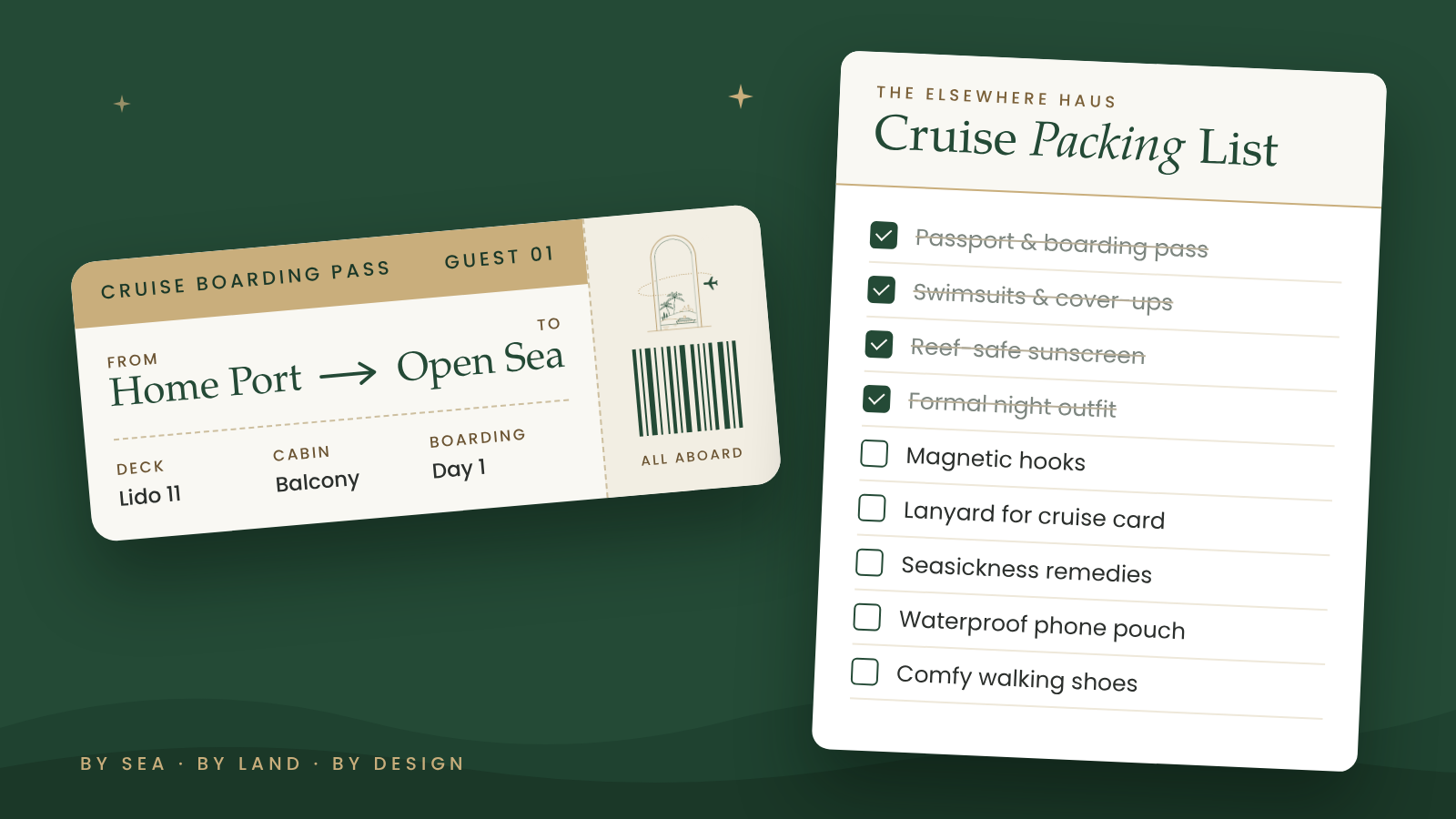
Want a complete checklist? Download my free Cruise Packing List for a printable, tick-as-you-go version.
Step 8: Embarkation Day
Boarding the ship for the first time is exciting, and a little preparation keeps it stress-free.
- Check in online before you leave home. Most lines open online check-in weeks ahead, and you'll choose an arrival time at the terminal.
- Download your cruise line's app. It usually holds your boarding pass, daily schedule, dining reservations and onboard account.
- Arrive at your chosen time, not hours early. Earlier arrival rarely means boarding faster.
- Tag your bags with the luggage tags from your cruise documents and hand them to the porters at the curb. Tipping them a few dollars a bag is customary.
- Go through security and check-in, then walk on board.
- Once aboard, grab lunch, explore the ship and book any specialty dining or spa times you want before they fill up.
- Attend the mandatory safety drill. On many ships you'll watch a short video and check in at your assigned muster station.
Life on Board: Tips for Your First Few Days
- Your cruise card is everything. It's your room key, your ID for getting on and off the ship, and how you pay for purchases on board. Keep it with you at all times.
- Check the daily schedule each evening in the app or the printed planner. It lists shows, activities, dining hours and port details for the next day.
- Know your "all aboard" time on port days and leave yourself plenty of buffer. The ship will not wait if you're late returning from an excursion you booked on your own.
- Book popular excursions early, either through the cruise line or a trusted local company.
- Try the main dining room at least once. The service and multi-course dinners are a highlight for many first-timers.
- Enjoy sea days. They're often the most relaxing part of the trip, with no alarm clock and nowhere to be.
- Keep an eye on your onboard account in the app so there are no surprises at the end.
Worried About Seasickness?
Today's ships are large and have stabilizers, so most guests feel very little movement, especially in calm, warm-water regions like the Caribbean. If you're concerned:
- Choose a midship cabin on a lower deck
- Pack an over-the-counter remedy, or ask your doctor about options before you go
- Get fresh air on deck and look at the horizon if you feel queasy
- Many people swear by ginger candies and acupressure wristbands
First-Time Cruiser FAQ
Is a cruise a good value? Often, yes. Your accommodation, most meals, entertainment and transportation between destinations are bundled into one price, which can be hard to match on a land vacation that visits as many places.
Will I get bored on a cruise? Most first-timers are surprised by how much there is to do, from shows and trivia to pools, spas, cooking demonstrations and live music. And if you want to do nothing at all, a cruise is perfect for that too.
What should I wear to dinner? Most nights are resort casual. Many cruises have one or two optional "elegant" nights where guests dress up a little, but it's rarely required.
Can I use my phone at sea? Cellular service at sea can be very expensive. Put your phone in airplane mode and use the ship's Wi-Fi package if you need to stay connected.
Do I need to book excursions through the cruise line? Not always, but excursions booked through the cruise line come with the reassurance that the ship will wait if the tour runs late.
Ready for Your First Cruise?
Planning your first cruise should feel exciting, not overwhelming. When you work with me, I'll match you with the right cruise line, ship and cabin, watch for promotions, and handle every detail of the booking, so all that's left for you is to step aboard.
There's no planning fee, and I'm available 24/7 while you travel.
Book a FREE consult with me!